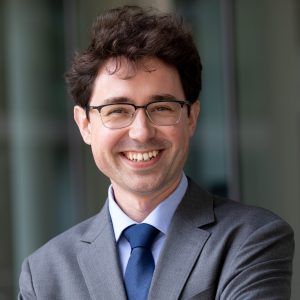
Meet our Researchers: Tomasz J. Nowakowski, PhD
Affiliation
Associate Professor, Departments of Neurological Surgery, Anatomy, and Psychiatry & Behavioral Sciences; Weill Institute for Neurosciences; Eli and Edythe Broad Center of Regeneration Medicine and Stem Cell Research; University of California, San Francisco (UCSF)
Research Focus
Our laboratory studies how the human brain develops and how the process of neuronal and glial development unfolds differently in autism and related neurodevelopmental conditions. We use modern genomic technologies to examine individual brain cells one at a time, reading the activity of thousands of genes in each cell simultaneously. Applied to post-mortem brain tissue generously provided through Autism BrainNet, this approach is helping us build a detailed picture of molecular features that distinguish the autistic brain.
How the use of postmortem brain tissue from Autism BrainNet has enabled my research
My path into autism research grew from a lifelong fascination with how the human brain develops. Billions of neurons emerge from just a few progenitor cells in early development and organize into the circuits that allow us to think, feel, communicate, and connect with the world around us. Autism drew me in because it sits at the heart of these questions: the differences that define it often trace back to the earliest stages of brain development, yet the specific biological changes involved have remained difficult to identify.
No experimental model can fully substitute for studying the human brain. This is what makes brain donation so irreplaceable, and why Autism BrainNet has become central to our work.
Over the past five years, we’ve had the privilege to receive tissue from more than 100 Autism BrainNet donors, which enabled us to examine the activity of thousands of genes in individual brain cells. This has revealed that molecular differences in autism are concentrated in specific, identifiable types of cells—especially in brain regions involved in language and communication, and in deeper regions linked to learning and repetitive behavior. These findings are providing some of the clearest anchors to help us decipher what makes the autistic brain distinct.
One of the things I have come to appreciate is the complexity of autism. Different individuals experience and engage with the world in ways that are genuinely different. I hope that the knowledge derived from our studies will advance the understanding the biological basis of those differences in precise, cellular detail to ultimately help researchers, clinicians, and educators develop more targeted and meaningful support across the full spectrum of autistic experience.
To the families of donors: the choice you made is among the most generous acts imaginable. Every discovery we make stands on the foundation of your trust, and we carry that responsibility carefully. All data generated from this tissue is shared rapidly with the global scientific community, so that the impact of each donation reaches as far as possible and as quickly as possible.